
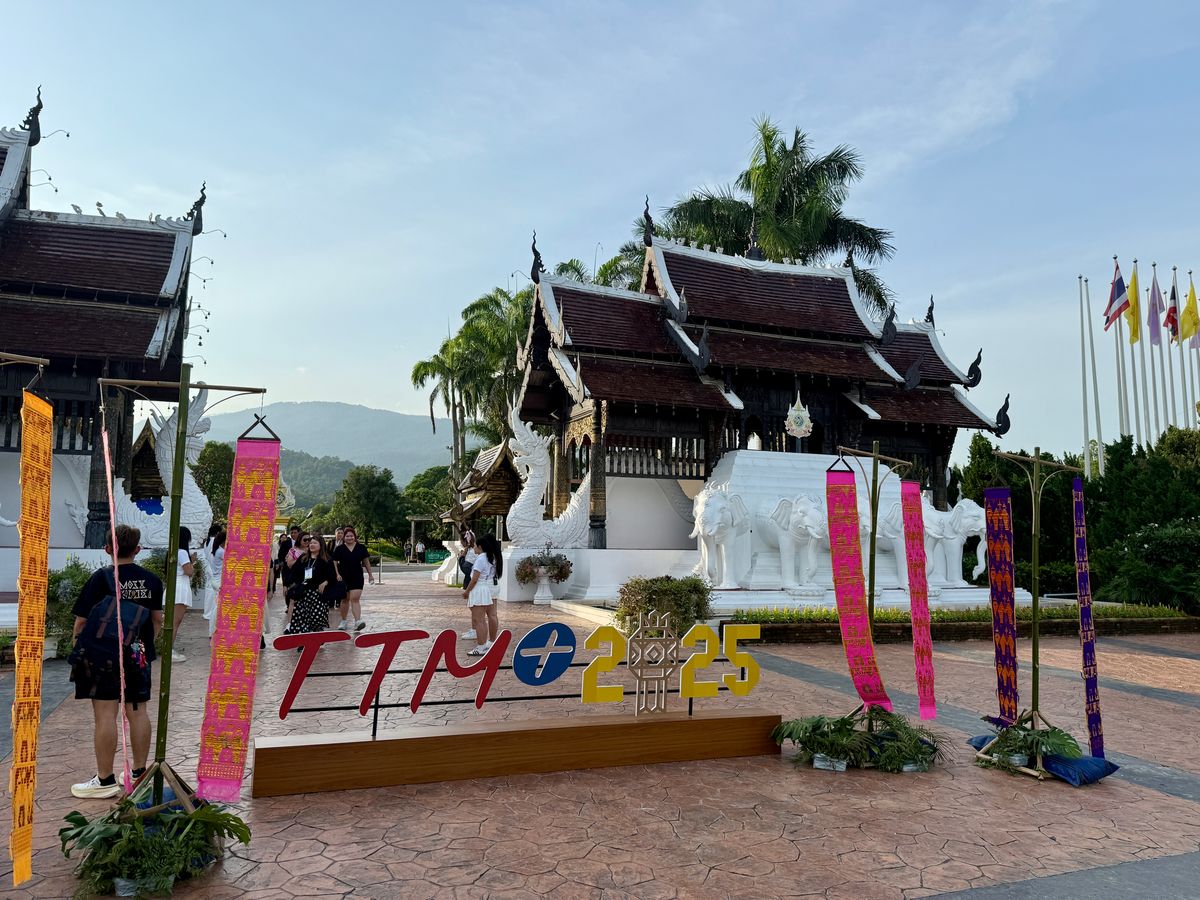

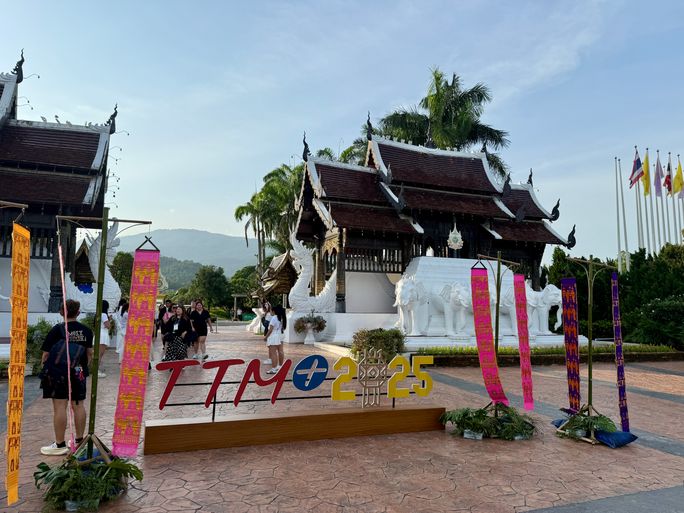
TTM+ attracted 450 Thai tourism operators and 406 buyers from 53 countries. (Photo Credit: Sara Perez Webber)
Call it the “The White Lotus” effect—U.S. tourism to Thailand is on the rise, as travelers are increasingly drawn to the country’s rich culture, focus on wellness and affordable luxury.
At the recent Thailand Travel Mart Plus 2025 (TTM+) travel trade event, which took place June 4-6 in Chiang Mai, Thailand, tourism officials explained how they plan to keep the momentum going.
They’re targeting the luxury, Gen Z and LGBTQ+ markets; and emphasizing the aspects of Thai culture—such as wellness and cuisine—that keep travelers coming back for more.
Increasing U.S. Tourism Numbers
TTM+ attracted 450 Thai tourism operators, a 4.65 percent increase over 2024, as well as 406 buyers from 53 countries—more than a third of them first-time attendees. The bustling event was expected to generate approximately 4.2 billion baht in tourism revenue (more than $129 million) and more than 13,000 business appointments.
Growing alongside the event is the number of U.S. visitors to Thailand. Nearly 470,000 Americans arrived in Thailand between January and May—up 10.78 percent from 2024.
“From the United States specifically, we’ve seen a steady upward trend,” said Malinee Nitikasetsunthorn, executive director of the Americas for the Tourism Authority of Thailand (TAT). More than a million U.S. visitors arrived in Thailand in 2024, surpassing the 2023 total of 930,206.
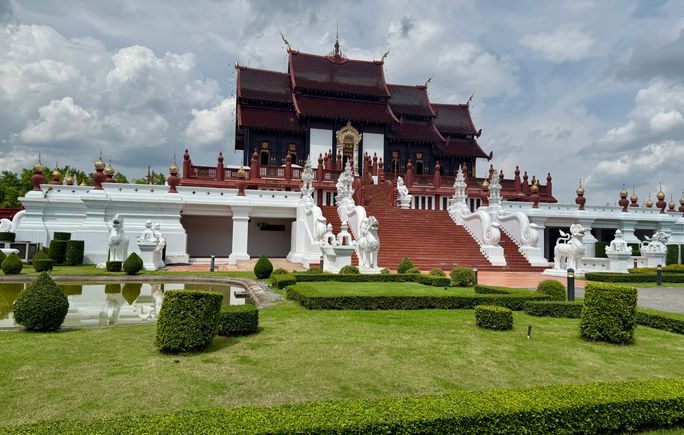
Thailand Travel Mart Plus (TTM+) took place at the scenic Royal Park Rajapruek in Chiang Mai, Thailand. (Photo Credit: Sara Perez Webber)
“The White Lotus” Effect
Why the growing interest in Thailand from American travelers? Nitikasetsunthorn pointed to several factors, including the latest season of HBO’s hit series, filmed on location in Thailand.
“‘The White Lotus’ created a powerful wave of interest in Thailand, particularly among American viewers,” she said. “We saw a ton of engagement on our dedicated microsite, thewhitelotus.thailandinsider.com, which was designed to help fans explore the real-life destinations featured in the series. This translated into a heightened interest in luxury travel, wellness resorts and cultural experiences in filmed locations like Koh Samui, Phuket and Bangkok.”
During the opening general session of TTM+, speaker Surapong Suebwonglee—deputy policy advisor to Thailand’s prime minister and chairman of Thailand’s National Soft Power Development Committee—lauded the show’s portrayal of the country’s “growing reputation as a global wellness destination” as well as its showcase of “the soul of Thai culture,” including temples and rituals. He compared the boost that film and television can bring to Thailand’s tourism industry to that experienced by South Korea, thanks to the popularity of Korean drama.
TAT “is working to make Thailand one of the globe’s most sought-after filming locations through various incentives and work permits,” said Thapanee Kiatphaibool, TAT’s governor. “Our goal is to showcase Thailand’s diverse landscapes and rich culture, further solidifying the country’s position as a premier travel destination.”
To entice more international film productions to Thailand, TAT’s Los Angeles office has invited a group of U.S.-based TV and film experts to visit the country in November. What’s more, the famed Bangkok International Film Festival is relaunching in January 2026.
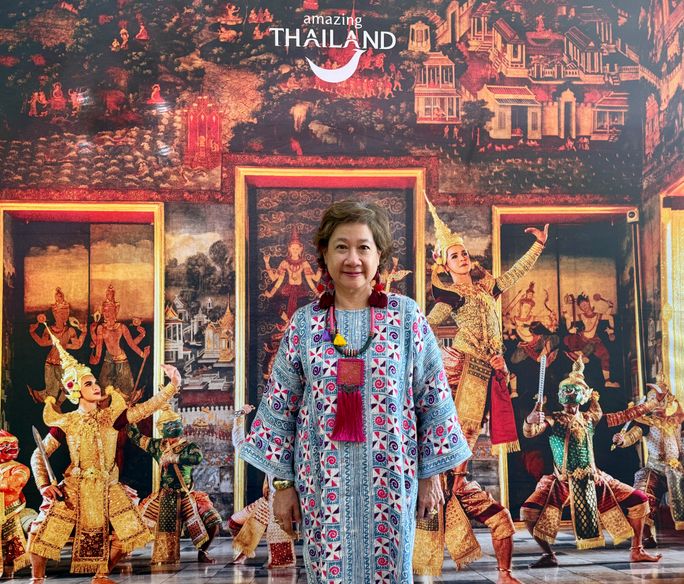
Malinee Nitikasetsunthorn, executive director of the Americas for the Tourism Authority of Thailand (TAT). (Photo Credit: Sara Perez Webber)
Targeted Outreach to Niche Markets
While U.S. travel to Thailand is increasing, TAT officials are focused on the quality of visitors rather than the quantity—targeting its long-haul marketing to consumers interested in culture, off-the-beaten-path destinations and luxury experiences rather than low-budget vacationers.
Gen Z is one focus of TAT’s efforts. Not only are travelers in their 20s attracted by Thailand’s more affordable luxury products, “they want to explore something new—and we have a lot of experiences,” said Nitikasetsunthorn. “They can enjoy a boxing course, a cooking class, even meditation. We think that if they come and they love Thailand, they can be our ambassadors.”
LGBTQ+ clients are another market courted by Thailand, which in January became the first Southeast Asian country to legalize same-sex marriage. TAT launched the “Go Thai. Be Free” website, outlining resources and events for LGBTQ+ travelers. “We want to say, ‘Please come to Thailand. You are welcome, and you will be safe,’” said Nitikasetsunthorn.
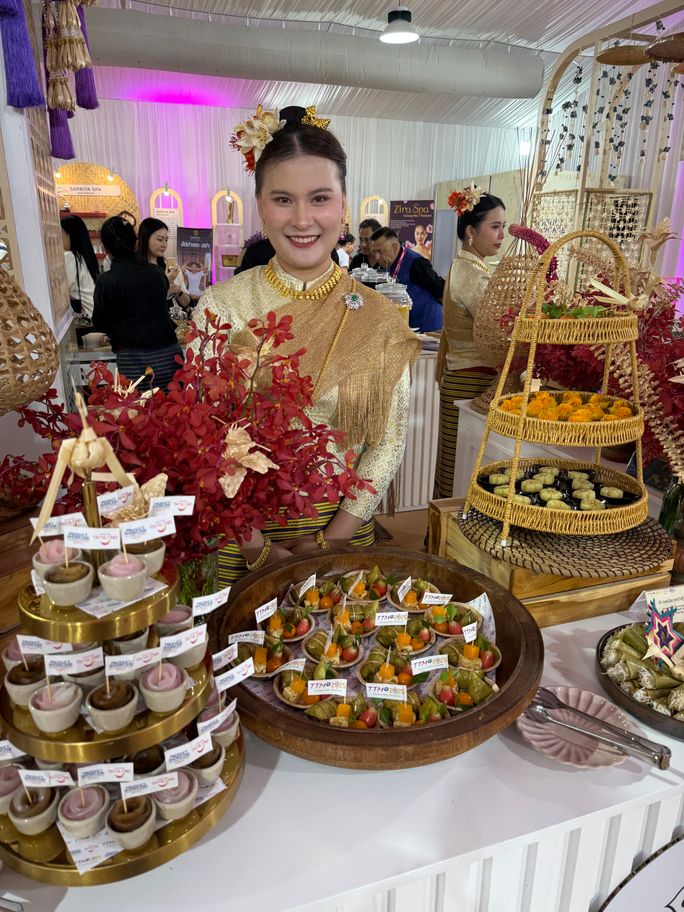
The Product Showcase at TTM+ showed off Thailand’s healthful cuisine. (Photo Credit: Sara Perez Webber)
Focus on Wellness and Cuisine
Traditional Thai practices like mindfulness and meditation are embedded in the country’s culture and can be shared with the world, noted the chairman of Thailand’s National Soft Power Development Committee in the TTM+ opening session. Thailand “is well positioned to become the wellness hub of Asia,” said Suebwonglee.
In the TTM+ Lanna Wisdom & Wellness Experience Product Showcase, trade show attendees could try traditional Thai massage treatments like Tok-Sen, which uses wooden tools to release tension; sample locally sourced wellness cuisine; and make Thai herbal compresses and other mindful crafts. Chiang Mai is an ideal destination for showcasing Thailand’s wellness traditions, as the northern part of the country “is known for serenity and traditional healing,” said Nithee Seeprae, TAT’s deputy governor for marketing and communications.
Home to one of the world’s most popular cuisines, Thailand’s food is another draw for tourists—and its flavorful dishes full of fresh herbs, produce and tropical fruits reflect Thailand’s healthful culture. Calling Thai cuisine “wellness on a plate,” Seeprae noted that 460-plus restaurants were included in the 2025 edition of The MICHELIN Guide Thailand, including the country’s first three-star entry, Sorn in Bangkok.
More Luxury Options
Not only will high-end travelers find more fine-dining establishments in Thailand, but they’ll also discover more luxury hotel options than ever.
“Thailand is seeing a strong growth in luxury tourism, particularly in destinations like Koh Samui and Phuket,” said Kiatphaibool, TAT’s governor. “These islands now host world-class resorts such as Amanpuri, Six Senses and Banyan Tree, offering high-end travelers everything from private villas to immersive wellness retreats. The country is also embracing sustainable luxury, with many properties integrating eco-conscious design and locally inspired experiences.”
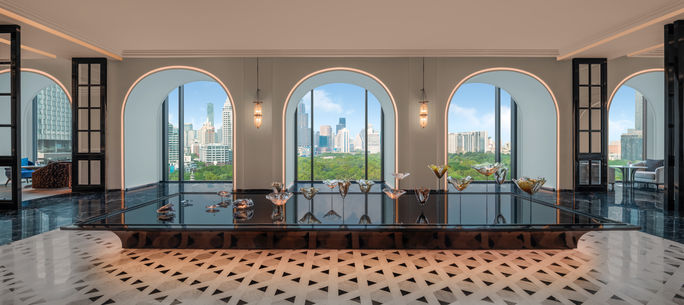
A glass lily pond art installation in front of windows overlooking Lumpini Park at the new Ritz-Carlton, Bangkok. (Photo Credit: The Ritz-Carlton, Bangkok)
In December 2024, The Ritz-Carlton, Bangkok debuted, marking the luxury brand’s first foray into Thailand’s capital. While Marriott’s Ritz-Carlton brand also has resorts in Koh Samui and Krabi’s Phulay Bay, “it’s definitely a brand that people are very happy to find now in a city like Bangkok,” said Tina Liu, general manager.
The sleek 260-key hotel overlooks the lush greenery of Lumpini Park in the new $3.9 billion One Bangkok mixed-use development in central Bangkok. Contrasting the property’s location with that of other luxury hotels along Bangkok’s riverside, Liu noted that the Ritz-Carlton combines centrally located convenience with “an urban oasis offering beautiful views.”
It also combines the luxury amenities Ritz-Carlton is known for—such as deluxe rooms measuring nearly 540 square feet with floor-to-ceiling windows overlooking the park, a plush 23rd-floor Club Lounge with five daily culinary presentations, Frette linens, Dyson hair dryers and a restaurant led by a French Michelin-starred chef, Duet by David Toutain—with thoughtful touches of Thai heritage. The lobby, for example, features a glass lily pond and dramatic arches, nods to traditional Thai homes. Each day at sunset, Ritz-Carlton team members perform a Klong Yao (Long Drum) ceremony on the vast terrace overlooking the park.
Soon Ritz-Carlton fans and Marriott Bonvoy loyalists will have another luxe option to choose from in the city—the recently announced Ritz-Carlton Bangkok, The Riverside is slated to open in 2028.
Promoting Lesser-Known Destinations
When Americans visit Thailand—known as the “Land of Smiles” for its warm hospitality—they’re very likely to come back. In fact, more than a third of U.S. travelers to Thailand in 2024 were repeat visitors. That’s why TAT is promoting lesser-known destinations, so returning visitors can dive deeper into Thai culture during lengthy vacations.
“Traditionally, U.S. travelers have favored destinations like Bangkok, Phuket, Chiang Mai and Krabi,” said Nitikasetsunthorn, TAT’s executive director of the Americas. “However, we’re now seeing growing interest in lesser-known regions such as Chiang Rai, Kanchanaburi and the Isan region—especially among repeat travelers seeking more authentic and off-the-beaten-path experiences.”
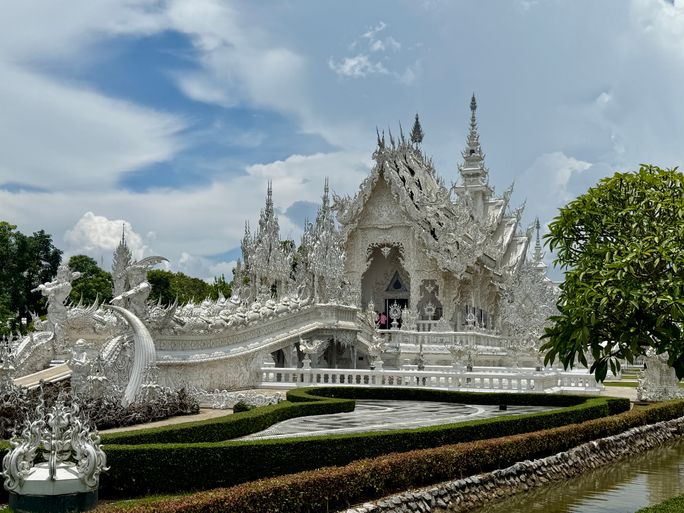
Wat Rong Khun (the White Temple) in Chiang Rai province, an area attracting more U.S. visitors. (Photo Credit: Sara Perez Webber)
To help clients with such immersive vacations, she recommends that travel advisors take note of community-based tourism projects in provinces like Nan and Loei, where visitors can engage directly with local artisans and traditions, and the Lanna Heritage Trail in northern Thailand.
Whether first-time or a repeat visitor, international travelers will find the entry process easier with the new Thailand Digital Arrival Card, which launched on May 1. Replacing the traditional paper card, it has “significantly streamlined the entry process for foreign visitors,” said Nitikasetsunthorn.
Travel Advisor Outreach
Last year, TAT opened a third U.S. office, adding Chicago to its existing locations in New York and Los Angeles. Not only does the move strengthen TAT’s presence in the Midwest, it “allows us to tailor outreach, build relationships with travel advisors, and support airline and media partnerships more effectively across regions,” said Nitikasetsunthorn.
She stressed that travel advisors “play a vital role” in connecting Thailand’s immersive cultural experiences with the right audiences: “Thailand stands ready to welcome your clients with exceptional hospitality and transformative travel experiences. As we look toward the second half of 2025, we are proud to offer more than iconic landscapes and cultural landmarks—we are curating authentic, high-value journeys that align with the evolving interests of today’s travelers.”
For the latest travel news, updates and deals, subscribe to the daily TravelPulse newsletter.
Topics From This Article to Explore
link