
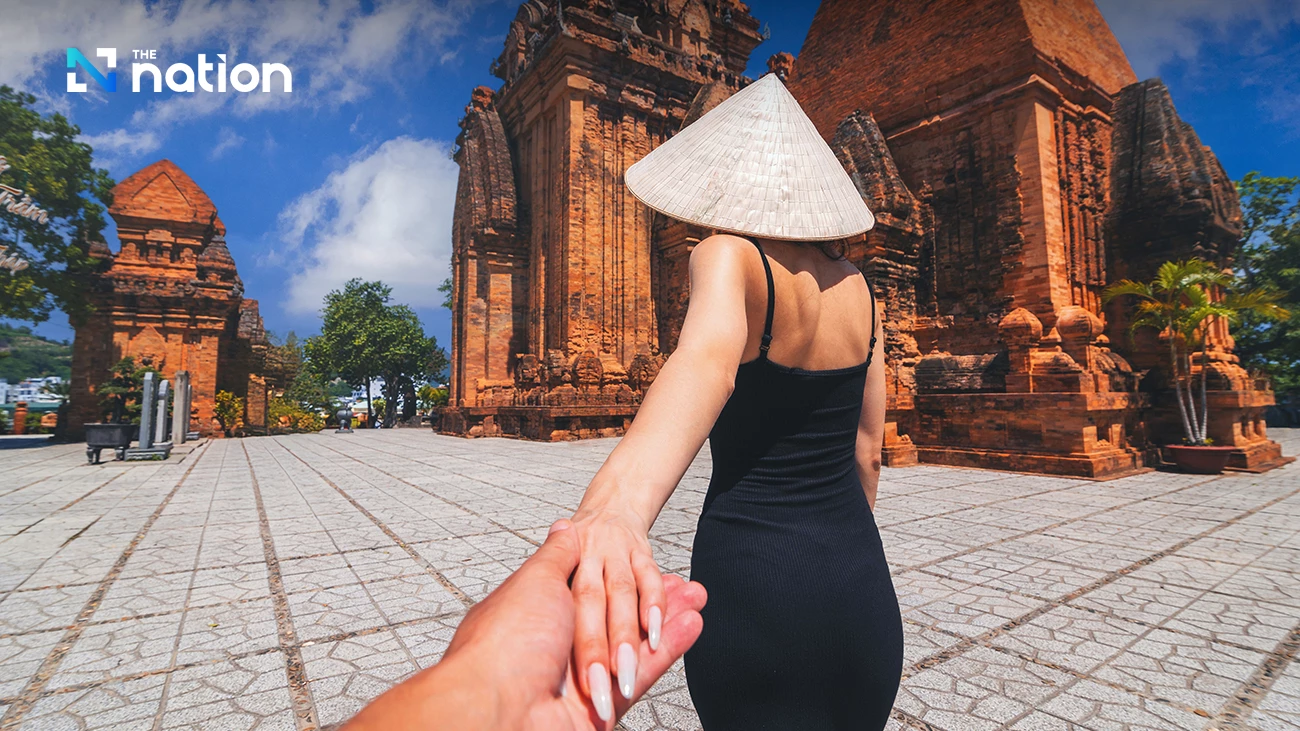

According to the Australian Hospitality Alumni Network in Vietnam, referencing data from Klook, over 70% of young tourists prefer independent travel, and road trips, as well as short border-crossing trips, are becoming popular. Vietnam is well-suited to this trend, offering affordable options, convenience, and diverse experiences.
Bich Phuong added that “Road trips” have become a new trend among independent travelers.
Vietnam’s Strategic Advantage
Although Vietnam and China have had political conflicts in the past, such as the 1979 China-Vietnam War and disputes over the Spratly Islands, “cultural similarities” have become Vietnam’s advantage in tourism.
From the Chinese New Year festival, familiar food, climate, to shared Buddhist religious foundations, Chinese tourists find it easier to adapt to Vietnam than to Western countries.
Tourism experts believe that Chinese tourists are able to distinguish between state-level conflicts and personal interactions, and tourism serves as a “bridge” to reduce that gap.
Moreover, when comparing spending per trip, Vietnam remains a cheaper destination than Thailand or Indonesia. According to a report by Vietnam Report based in Hanoi, the average expenditure of Chinese tourists in 2025 was around $379–$569 (approximately 12,000-18,000 baht) per person per trip. However, high-spending tourists tend to cluster in major cities.
Food and Dining: A Major Spending Category
“Instead of traditional group tour meals, young Chinese tourists are increasingly seeking authentic local dining experiences or premium restaurants,” said Pham Hai Quynh, Director of the Asia Tourism Development Institute in Hanoi.
He also noted that they prefer food tours focusing on regional specialties or restaurants with high reviews.
Vietnam’s Advantage in Cost and Convenience
Bhumikitti Ruktaengam, Vice President of the Tourism Council of Thailand (TCT), stated in an interview with Krungthep Turakij that Vietnam has an advantage due to its lower costs compared to Thailand, causing Thailand to risk losing some markets to Vietnam. For example, Russian tourists are now opting to visit Phu Quoc Island in Vietnam, which is cheaper than Phuket.
Real Gifts, Real Returns
In the post-COVID tourism competition, success is no longer just about the “number of visitors,” but also about the experience, impression, and brand recognition of a destination.
For example, when Phu Quoc reached 20 million foreign visitors on December 15, 2025, Vietnam used “gifts” such as pearl jewelry, flight tickets, accommodations, and entertainment packages to celebrate.
The welcoming ceremony was held with cultural performances and certificates awarded to the three special guests: the 19,999,999th, 20,000,000th, and 20,000,001st passengers, amid a joyful celebration.
The 20 millionth international visitor was Karolina Agnieszka Muskus from Poland. Sharing her thoughts at the event, she expressed her deep emotion and impression of the warm welcome and the beauty of Vietnam and its people. This was Muskus’s first time in Vietnam, and she hopes to return in the future and recommend this destination to her friends and family.
The gift for the “20 millionth tourist” was valued at nearly 500 million Vietnamese dong (around 600,000 baht), including pearl jewelry, flight tickets, and vouchers for accommodations and entertainment in Phu Quoc.
Passengers in the 19,999,999th and 20,000,001st slots also received gifts worth over 200 million dong (around 240,000 baht) each. In addition, all passengers on the flight received souvenirs and activity vouchers.
Tourism Revenue Supports Vietnam’s Economy
In 2025, Vietnam welcomed over 21 million international tourists, surpassing pre-COVID levels. Tourism revenue, reaching nearly $30 billion, helped sustain the economy amidst inflation, natural disasters, and global trade pressures.
Although the average expenditure per trip is lower than Thailand’s, new-generation Chinese tourists are spending more, especially on food and quality experiences. Michelin-starred restaurants and cultural tours are becoming key spending areas.
Tourism: A Positive or Negative Impact?
Pham Hai Quynh mentioned that some tourists’ inappropriate behavior could affect China’s image and spark social media drama in Vietnam, such as the issue of “cheap, low-quality tours” last month.
However, she also pointed out that positive interactions in tourism make it easier for the Vietnamese to separate political or historical tensions from personal relationships and interactions, as well as the economic and tourism connections between the two countries.
Vu Ngoc Lam, Director of Agoda Vietnam, revealed that the search for Vietnam by Chinese tourists on Agoda’s platform increased by 90% last year. The most searched cities included Ho Chi Minh City, Phu Quoc Island, Hanoi, and Da Nang.
He said that this reflects the growing tourism connection between the two markets, particularly after the opening of new flight routes.
In the post-COVID tourism battle, no country can remain at the top forever. Countries that were once champions can fall behind if they stick to old formulas, while countries that were once backup choices can emerge as leaders if they understand the new generation of tourists faster.
Vietnam is proving that tourism is not a game of the past but a game of adaptation. Is Thailand ready to bring back the image of being “safe and trusted”?
Vietnam, nikkei
link